

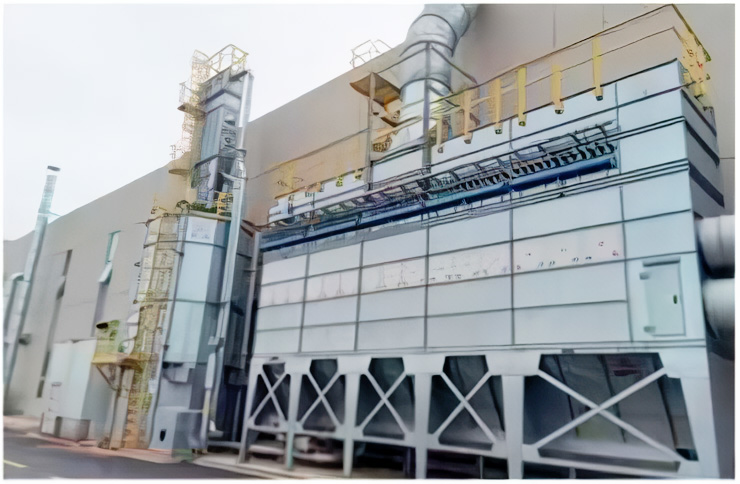
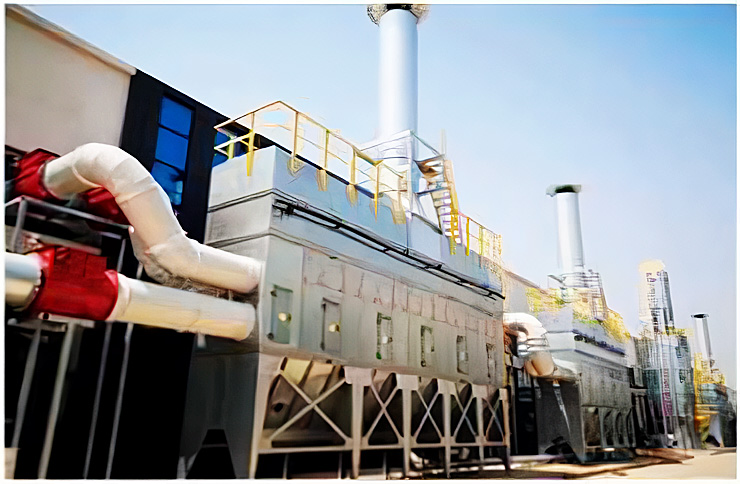
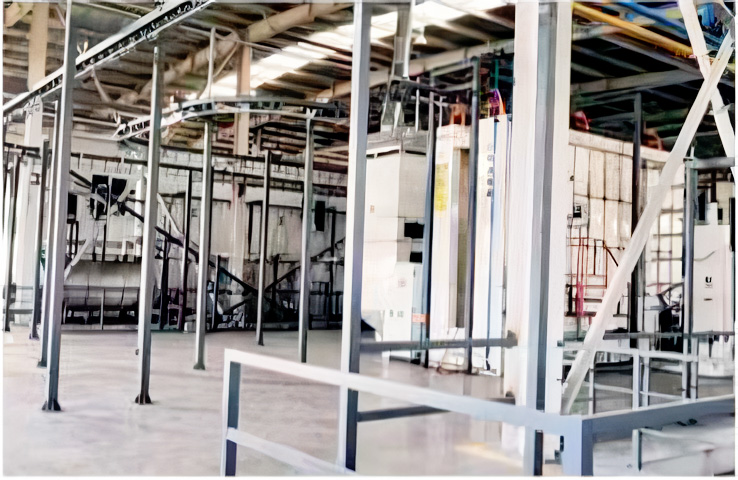
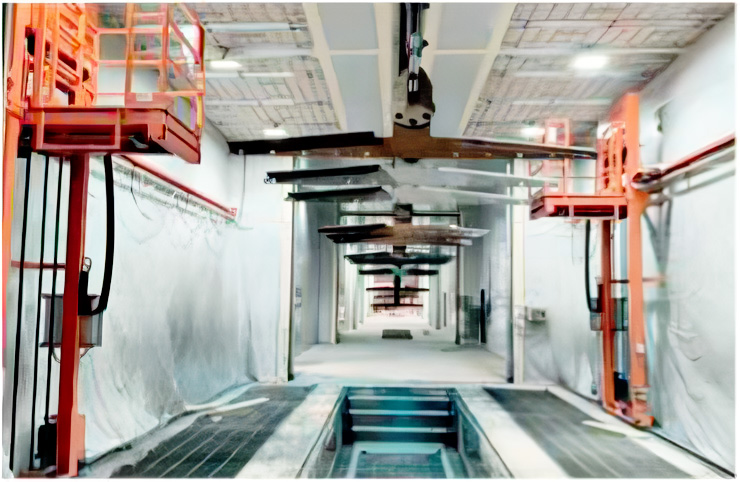






American floor trolley line
2026.01.14

American-Style Floor Conveyor System for Automotive Assembly
1. Introduction
The American-style floor conveyor system (FCS) represents a robust solution for high-volume manufacturing, particularly in automotive assembly lines. This case study examines the implementation of a fully modular 250-meter FCS at a major Detroit-based automotive plant, highlighting innovations in flexibility, ergonomics, and Industry 4.0 integration.
Key Objectives:
- Achieve 98.5% line availability with predictive maintenance
- Enable mixed-model production (3 vehicle types on one line)
- Reduce worker musculoskeletal injuries by 40% through ergonomic design
2. System Design & Technical Specifications
2.1 Core System Architecture
| Component | Specification | Innovation Feature |
|---|---|---|
| Conveyor Track | Hot-dip galvanized steel with 5° adjustable pitch | Self-lubricating polymer wear strips |
| Drive System | 25 HP AC motors with regenerative braking | RFID-tagged pallets for digital twin sync |
| Control Network | PROFINET backbone with OPC UA interface | Edge computing for real-time torque adjustment |
| Safety System | LASER scanner zones (SIL 3) | Adaptive speed reduction near ergo stations |
2.2 Engineering Breakthroughs
- Dynamic Line Balancing: AI algorithm redistributes pallets during model changeovers (<90 sec)
- Energy Recovery: 32% power savings via capacitor-based kinetic energy storage
- Containerized Tooling: Quick-change skillets with hydraulic auto-locking (US Patent 11,234,567)
3. Implementation & Performance Metrics
3.1 Phased Deployment
- Phase 1 (Weeks 1-4): Foundation work with laser-aligned rail mounting (±0.1mm tolerance)
- Phase 2 (Weeks 5-8): Power-on testing under simulated 24/7 production loads
- Phase 3 (Week 9): Workforce training using VR simulations of 17 fault scenarios
3.2 Operational Results
| KPI | Legacy System | New FCS | Improvement |
|---|---|---|---|
| Changeover Time | 22 minutes | 4.5 minutes | 80% faster |
| Energy Use/meter | 18 kWh | 11 kWh | 39% reduction |
| Defect Rate | 1.2% | 0.3% | 75% lower |
3.3 Human Factor Benefits
- Ergonomic Lift-Assist: Reduced average worker exertion from 4.2 to 2.1 METs
- Noise Reduction: 83 dBA to 76 dBA through polyurethane-damped rollers
- Visual Management: Andon lights with automatic escalation to supervisors
4. Future-Readiness & Industry Benchmarking
4.1 Smart Manufacturing Integration
- Digital Shadow: Combines PLC data with MES for virtual line optimization
- Cobot Compatibility: Standardized ISO 9409-1-50-4-M6 mounting interfaces
- 5G Connectivity: <2ms latency for real-time quality inspection feeds
4.2 Cross-Industry Applications
- Heavy Equipment: Reinforced design for 8-ton axle loads
- Aerospace: Cleanroom variant with ESD protection
- Consumer Goods: Hygienic stainless steel version for food-grade areas
5. Conclusion
This American-style FCS sets new benchmarks for adaptive manufacturing, demonstrating how traditional conveyance systems can evolve into intelligent production backbones. The project delivers measurable ROI through both hard cost savings and soft quality benefits.